
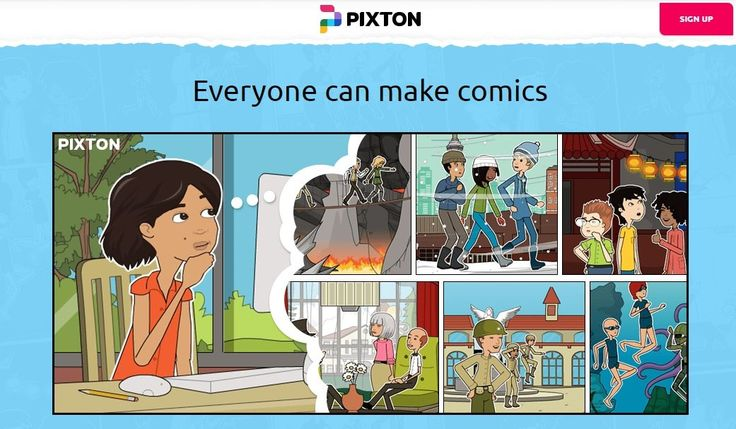
Classroom assignments become more engaging when students can express their ideas creatively rather than relying only on written paragraphs. Comics, visual storytelling, and illustrated characters can help learners explain complex concepts, organize information, and demonstrate what they understand. These activities are useful across subjects, from language arts and history to science and social studies.
Digital comic creation offers teachers a practical way to introduce visual learning into everyday lessons. Instead of asking students to write a traditional report for every task, educators can invite them to create short comic strips that communicate an idea through dialogue, characters, and scenes. Platforms such as Pixton can serve as a starting point for exploring how comic-based assignments fit into classroom learning.
When planned carefully, comic assignments are more than an entertaining classroom activity. They encourage students to think critically, summarize information, develop narratives, and communicate ideas in a format that feels approachable. The key is to connect every creative task to a clear learning objective.
What Is Comic-Based Learning?
Comic-based learning uses illustrations, characters, dialogue, and visual sequences to help students understand or communicate information. A comic strip typically presents a sequence of events or ideas through individual panels, with each panel contributing to the overall message.
For classroom assignments, this approach gives students a structured way to demonstrate understanding. They must decide which information matters, how ideas connect, and how to present the content clearly to an audience.
For example, a history teacher might ask students to illustrate a conversation between two historical figures. A science teacher could assign a comic explaining the water cycle, while an English teacher might ask learners to rewrite a scene from a novel as a visual narrative.
These activities combine creativity with academic thinking. They also offer an alternative format for students who find it easier to communicate through images and dialogue than through lengthy written responses.
Why Teachers Should Use Comics for Assignments
Comic-based activities can support several important learning skills when they are aligned with the curriculum.
1. Improve Student Engagement
Students may become more interested in a task when they have opportunities to make creative choices. Selecting characters, arranging scenes, and writing dialogue can make an assignment feel more interactive.
Engagement alone does not guarantee learning, so teachers should provide clear instructions and assessment criteria. A creative project should still demonstrate the knowledge or skills required by the lesson.
2. Strengthen Reading and Writing Skills
Creating a comic requires students to communicate ideas concisely. They must write dialogue, select appropriate vocabulary, maintain a logical sequence, and consider how their intended audience will interpret the story.
These activities can help students practice summarizing, editing, sentence construction, and narrative development. Teachers can also use comics to introduce dialogue punctuation, character development, and story structure.
3. Encourage Critical Thinking
A limited number of panels forces students to prioritize information. They need to identify the central message, remove unnecessary details, and decide how each scene contributes to their explanation.
For example, students creating a comic about a scientific experiment must understand the procedure before representing it visually. Simply adding attractive illustrations is not enough; the sequence must accurately explain the process.
4. Support Different Learning Preferences
Some learners benefit from combining visual information with written explanations. Comics provide an opportunity to connect pictures, words, and sequences in a single assignment.
Teachers can also offer alternative formats when appropriate. A student who struggles with drawing, for instance, should not be disadvantaged if the learning objective is to explain a historical event rather than demonstrate artistic ability.
How to Use Pixton for Classroom Assignments
Teachers can introduce comic-based assignments through a simple process. The objective is to make the activity easy to understand while ensuring students remain focused on learning.
Step 1: Choose a Clear Learning Objective
Before creating an assignment, identify what students should know or be able to do by the end of the activity.
For example, a teacher might want students to:
- Explain the main events of a short story.
- Describe the stages of a plant’s life cycle.
- Demonstrate how a mathematical problem is solved.
- Compare two historical events.
- Practice a conversation in a foreign language.
A specific objective makes it easier to design instructions and evaluate student work fairly.
Step 2: Prepare the Assignment Instructions
Explain the task, expected content, number of panels, and submission requirements. Students should understand that their comic must demonstrate knowledge rather than simply look attractive.
For example, an English assignment could ask students to create a six-panel comic retelling a short story. The comic must include the main characters, the central conflict, three important events, and a clear ending.
Teachers can also provide a sample comic or a short planning worksheet to help students organize their ideas before beginning.
Step 3: Set Up the Classroom Activity
Teachers can explore the platform’s available classroom and activity features to prepare tasks for their students. The process generally involves selecting an activity, adapting its instructions, and deciding how students will complete and submit their work.
The official Pixton help center explains how educators can create activities, edit writing prompts, attach templates, establish rubrics, and assign due dates.
Start with a short activity for the first lesson. This allows students to become familiar with the comic format before they begin longer projects.
Step 4: Let Students Build Their Comics
Once students understand the instructions, they can plan their panels, select characters and settings, and write dialogue or captions. Encourage them to draft the content before spending time on visual details.
A useful panel structure might include:
- Introduction: Introduce the topic, setting, or problem.
- Development: Present important information or events.
- Explanation: Show how the concept works or why something happens.
- Conclusion: Summarize the lesson or provide a solution.
The exact structure should depend on the subject. A science explanation, for instance, may require a sequence of stages rather than a traditional story.
Step 5: Review and Submit the Assignment
Before submission, students should check spelling, factual accuracy, dialogue clarity, and the logical order of panels. Teachers can ask learners to exchange drafts with classmates and provide constructive feedback.
Depending on the classroom setup, students may submit their work through a supported sharing option or download their projects for submission through a learning management system. Teachers should verify which options are available in their accounts.
Creative Pixton Assignment Ideas for Different Subjects
One advantage of comic-based assignments is their flexibility. Teachers can adapt the same general format to different grade levels, subjects, and learning objectives.

1. English and Literature
Ask students to retell a chapter, create an alternative ending, or write a conversation between two characters. This helps assess comprehension, vocabulary, sequencing, and character analysis.

2. Science
Students can explain the water cycle, demonstrate how digestion works, or illustrate a food chain. Each panel should represent an accurate stage or relationship.

3. History and Social Studies
Students can reconstruct a historical event, compare different perspectives, or illustrate how a community changes over time. Ask them to distinguish documented facts from imagined dialogue.

4. Mathematics
Students can create a real-world word problem, show each calculation through dialogue, and explain why the answer makes sense. This reveals their reasoning rather than just the final result.

5. Foreign Languages
Ask students to create a conversation about shopping, travel, greetings, or ordering food. Specify the vocabulary and grammar structures they must use.
How to Assess Student Comic Assignments
A well-designed assessment measures the learning objective, not just the appearance of the finished comic. Teachers should communicate their grading criteria before students begin.
A simple rubric can make expectations transparent and provide consistent feedback.
| Assessment criterion | Suggested weight |
|---|---|
| Subject knowledge and accuracy | 40% |
| Organization and logical sequence | 25% |
| Writing, vocabulary, and clarity | 20% |
| Creativity and visual communication | 15% |
| Total | 100% |
Teachers can adjust these percentages to suit the task. For example, a mathematics assignment should prioritize accurate calculations and explanations, while a narrative-writing task may place greater emphasis on storytelling.
Feedback should identify what students did well and what they can improve. Instead of saying that a comic needs more creativity, a teacher might explain that two panels need clearer transitions or that a scientific term requires a more accurate definition.
Best Practices for Successful Classroom Activities
Comic assignments work best when teachers combine creative freedom with clear academic expectations.
- Keep the first activity short. A small project gives students time to learn the format without becoming distracted by too many design choices.
- Provide a model. Show students an example that demonstrates the expected quality and structure.
- Allow different approaches. Students can choose characters, settings, or storylines while meeting the same learning objectives.
- Set realistic deadlines. Give students enough time for planning, writing, editing, and final submission.
- Consider accessibility. Offer alternatives for learners who need additional writing support, assistive technology, or a nonvisual format.
- Discuss digital citizenship. Remind students to use appropriate language, respect classmates, and avoid sharing personal information in online projects.
Teachers can also explore UNESCO’s resource on media and information literacy, which provides a broader context for developing students’ critical engagement with information and digital media.
Common Mistakes to Avoid
One common mistake is making artistic quality more important than subject knowledge. Students should not lose marks for simple designs when their task is to demonstrate scientific understanding.
Another mistake is providing vague instructions. If students do not know the required content, they may focus on decorating panels instead of completing the assignment.
Teachers should also avoid introducing too many new tools at once. A short demonstration and a manageable first project can prevent confusion and help students focus on the educational purpose.
Finally, teachers should check device access, internet availability, privacy requirements, and account restrictions before assigning digital work. A paper-based storyboard can serve as a useful alternative when technology is unavailable.
Frequently Asked Questions
1. Can Pixton be used for classroom assignments?
Yes. Teachers can use comic creation for writing exercises, reading responses, science explanations, history projects, language practice, and other curriculum-related tasks. The assignment should have a clear objective and measurable expectations.
2. Is Pixton suitable for students who struggle with writing?
Comic-based activities can provide a structured starting point for students who find traditional writing challenging. Characters, scenes, captions, and dialogue help learners organize ideas, although teachers should provide additional support when needed.
3. How can teachers grade comic assignments fairly?
Use a rubric that evaluates subject accuracy, organization, writing quality, and visual communication. Explain the criteria before students begin and ensure that artistic skill does not outweigh the assignment’s actual learning goals.
4. Can students work together on comic projects?
Yes, collaborative comic projects can encourage discussion, planning, and peer learning. Teachers can assign specific roles, such as researcher, scriptwriter, editor, and presenter, so each student contributes meaningfully.
5. What should teachers consider before assigning digital comics?
Teachers should check device availability, account requirements, accessibility needs, privacy policies, and submission options. Providing clear instructions and an alternative format can help ensure that every student has an opportunity to participate.
Conclusion
Comic-based assignments offer teachers a practical way to combine writing, visual communication, and subject knowledge in one learning activity. When students create comics, they must organize information, make thoughtful choices, and explain concepts in a format that others can understand.
The most effective approach is to begin with a clear learning objective, provide manageable instructions, and assess students according to what they have learned. Whether the task involves explaining a scientific process, analyzing literature, or solving a mathematical problem, digital storytelling can make classroom assignments more interactive and meaningful.
By integrating creative tools into a well-planned lesson, educators can give students additional ways to express their understanding while continuing to develop essential academic skills.